Working Principle of Four-Stroke Diesel Engines
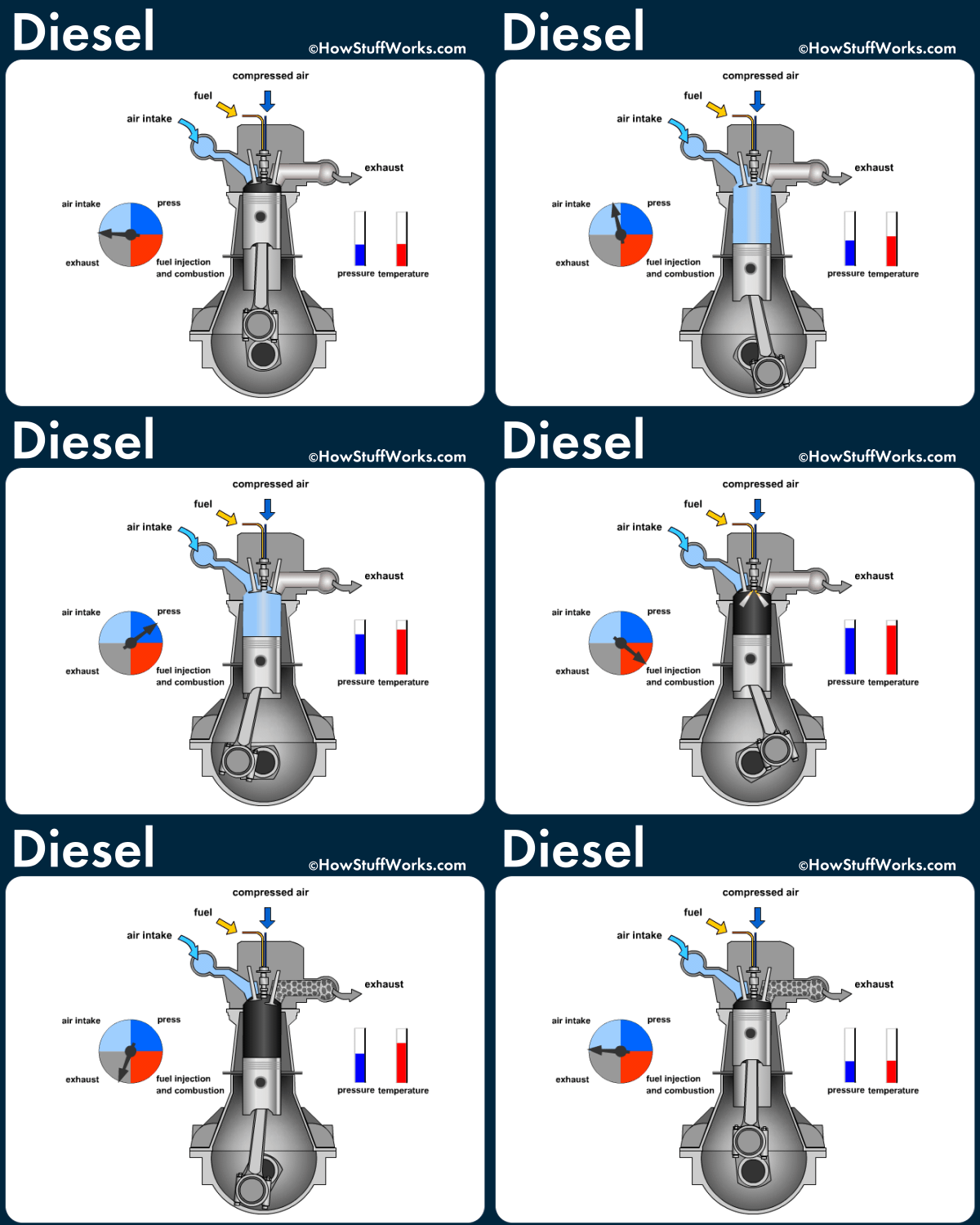
Working Principle of Four-Stroke Diesel Engines
An engine is the power source of a generator set. The engine of a generator set is a thermal power device, referred to as a thermal engine. A thermal engine converts the thermal energy generated by fuel combustion into mechanical energy by means of the state change of the working fluid.
According to the number of strokes in the piston reciprocating movement of the engine during a working cycle, it is divided into four-stroke and two-stroke engines. An internal combustion engine in which the piston reciprocates for four strokes in one working cycle is called a four-stroke reciprocating piston internal combustion engine, and the piston reciprocates two strokes to complete a working cycle is called a two-stroke reciprocating piston internal combustion engine. The diesel generator sets we currently produce are based on four-stroke diesel engines.
The work of a four-stroke diesel engine is completed by the four processes of intake, compression, combustion and exhaust. These four processes constitute a working cycle. A diesel engine in which the piston goes through four processes to complete a working cycle is called a four-stroke diesel engine